
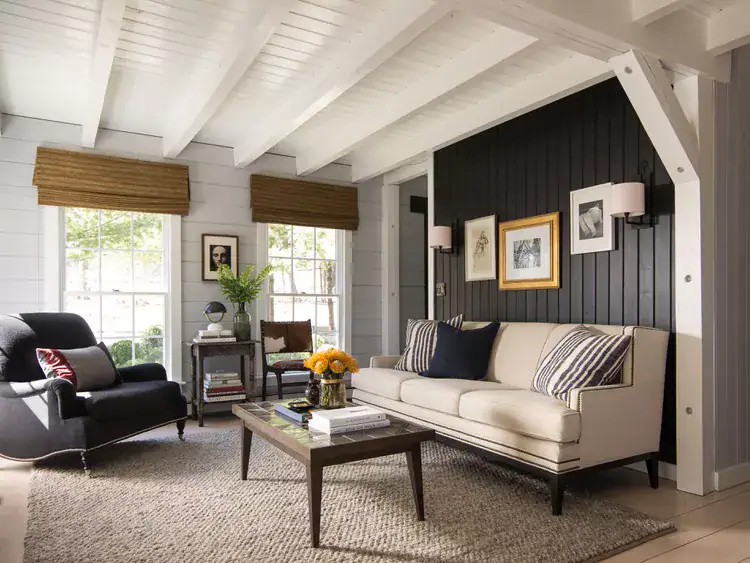
When done right, an accent wall can completely transform the mood, depth, and personality of a room—without requiring a full paint job. Whether you’re looking to add a bold pop of color or highlight architectural features, accent walls are one of the easiest ways to refresh your space and make it feel more custom.
What Is an Accent Wall?
An accent wall is a single wall in a room painted or treated differently than the others. It draws attention, adds contrast, and can define the mood of the space. Accent walls are especially powerful in living rooms, bedrooms, dining areas, and entryways—but they can work in just about any room.
Choosing the Right Wall
Not all walls are ideal for accenting. A good candidate might be the wall behind your bed, a fireplace wall, or the first wall you see when you enter a room. Look for walls that are naturally central or already serve as a focal point.
Avoid choosing walls with a lot of doors, windows, or other interruptions, as these can dilute the impact of the accent.
Picking a Color (or Finish)
Your accent wall doesn’t have to be loud or bright (though it can be!). Here are some ideas:
- Bold colors like navy, emerald, or terracotta add drama.
- Warm neutrals like taupe or charcoal create depth without overwhelming the room.
- Textures or finishes like faux brick, wood panels, or even wallpaper add richness and interest.
Make sure your color choice complements the other walls, your furnishings, and the overall feel of the space.
Why Accent Walls Work
Accent walls help:
- Break up open-concept layouts
- Highlight architectural features
- Add a designer look without a full remodel
- Create visual interest in otherwise flat rooms
They’re also a great way to try bold colors without fully committing to painting an entire room.
Let Paint Craft Co. Help You Make It Happen
At Paint Craft Co., we know how much of a difference one wall can make. Whether you want something bold, soft, textured, or totally custom, our team can help you choose the right color and finish—and deliver a clean, professional result you’ll love.
We’re here to take the guesswork and stress out of the process, so you can enjoy the transformation without lifting a brush.
FAQs
1. How can an accent wall completely change the way my room feels?
An accent wall works like a visual magnet, instantly pulling the eye toward a single surface and quietly reshaping how you experience the whole room. By adding a deeper color, bold pattern, or textured material on just one wall, you can introduce depth, create a focal point, and make even a plain space feel curated and intentional.
2. Which wall should I choose as the accent wall in my space?
Start by asking which wall already wants attention: behind your bed or sofa, around a fireplace, or framing a desk or TV. Choosing the wall that naturally anchors furniture or architectural features ensures the accent feels purposeful, not random, so the room looks designed rather than just painted differently.
3. How do I pick an accent wall color that enhances my room instead of overwhelming it?
Think about your existing color scheme first, then decide if your accent should contrast boldly or whisper in the same family. Deep navy, forest green, terracotta, or charcoal can feel dramatic yet timeless when balanced with neutral surrounding walls and coordinated furniture, following the 60-30-10 rule for color distribution.
4. Are accent walls still in style, or will my room look dated in a few years?
Accent walls have evolved from single bright colors to more sophisticated uses of texture, pattern, and moody, nature-inspired hues. When you align your accent wall with the room’s function and your personal style—rather than chasing fleeting trends—it becomes a lasting design feature instead of a dated fad.
5. Can accent walls work in small rooms, or will they make the space feel cramped?
Used thoughtfully, an accent wall can actually make a small room feel more expansive by creating depth and a clear focal point. Darker or bolder tones on a single wall often read as a backdrop rather than a barrier, especially when the other walls stay lighter and the accent color connects to textiles or art in the room.
Ready to make your space stand out?
Let Paint Craft Co. help you bring your vision to life—starting with just one wall.

Cameron Loughlin is the founder of Paint Craft Co., a new residential and commercial painting company serving Denver and Colorado Springs. With over a decade of hands-on experience, he combines technical craftsmanship with strengths in sales, marketing, and team building. Cameron has learned what homeowners and businesses value most: clear communication, reliability, and superior workmanship. He has built his company to deliver exactly that. His vision marries the professionalism and systems of a larger firm with the personalized attention of a local business. He’s assembling a team of skilled painters who take pride in their craft and a customer-first approach that keeps projects on time, on budget, and stress-free. From complete home transformations to commercial refreshes and specialized work on cabinets, decks, and fences, Cameron focuses on exceptional results and lasting relationships. By streamlining estimates, scheduling, and follow-up, he makes the process transparent. Cameron is committed to trust, consistency, and genuine local community care.