
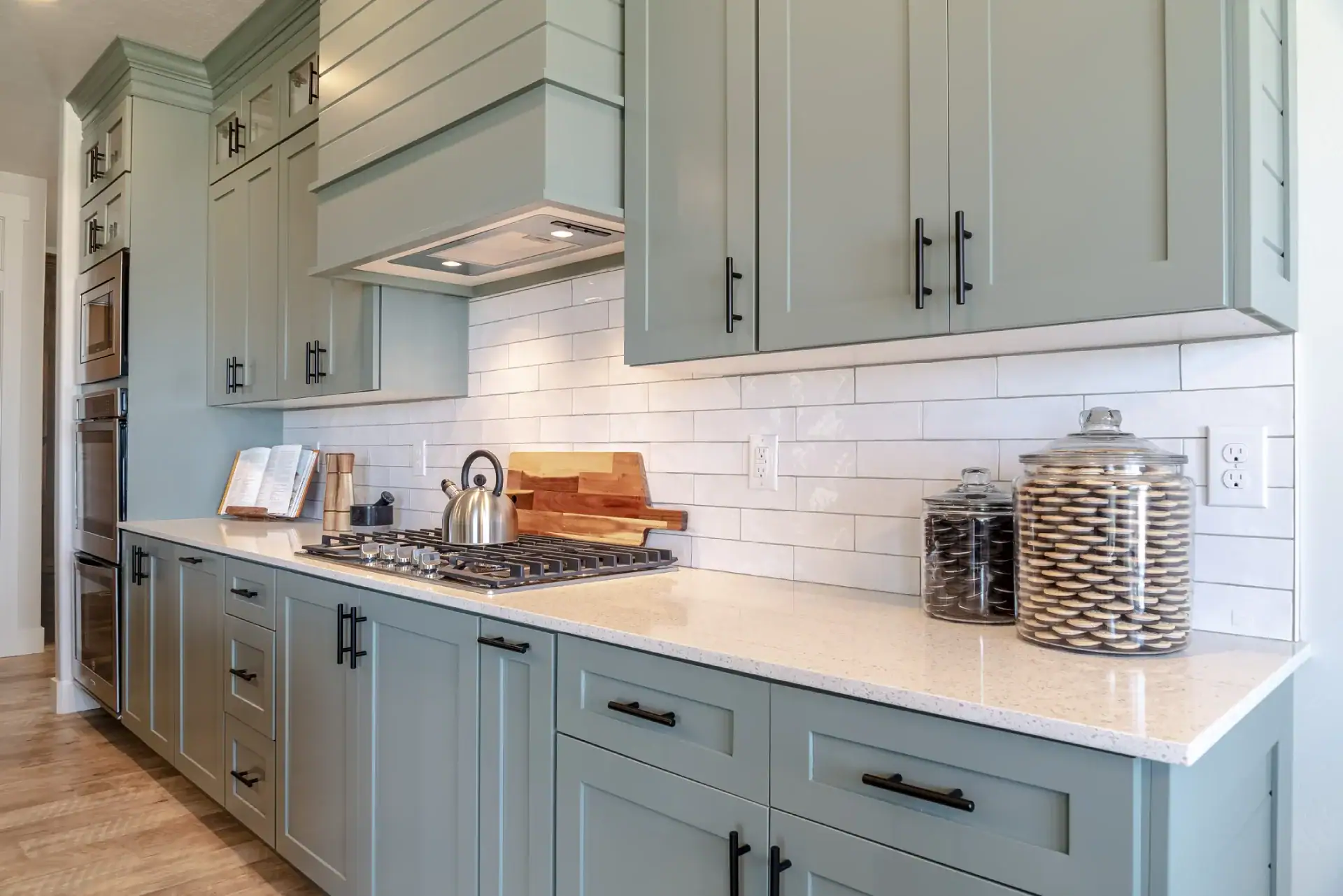
Choosing between painted vs. stained cabinets comes down to the look you want and the wood you have. Paint gives a smooth, uniform, any-color finish that brightens a kitchen and hides grain; stain shows off the natural wood grain in warm, rich tones. Paint offers the most color flexibility and a modern look, while stain highlights quality wood and hides wear more forgivingly. Both are durable when done right.
Here’s how painted and stained cabinets compare on looks, durability, cost, and upkeep—so you can pick the right finish for your Denver kitchen.
Painted vs. stained cabinets: what’s the core difference?
The core difference is that paint sits on top of the wood as an opaque, colored film, while stain soaks into the wood and lets the natural grain show through. Paint covers the wood completely in any color you choose; stain enhances what’s already there in wood tones.
That single distinction shapes everything else—the style each creates, how they wear, which cabinets they suit, and what they cost. Neither is universally “better”; the right choice depends on your kitchen, your cabinets, and the look you’re after.
What are the pros and cons of painted cabinets?
Painted cabinets deliver a clean, smooth, contemporary look in virtually any color. They’re the go-to for bright whites, bold colors, and a seamless modern style, and they can transform dated cabinets completely.
Pros: any color, smooth uniform finish, hides grain and dated wood, brightens a space, updates the look dramatically.
Cons: chips can be more visible, shows brush marks if poorly applied, needs excellent prep to last, harder to touch up seamlessly.
Paint is ideal when you want to change the color, cover builder-grade or worn wood, or achieve a crisp, modern kitchen. Durability comes down to prep and product—our guide on how long painted cabinets last covers what makes the finish hold up.
What are the pros and cons of stained cabinets?
Stained cabinets showcase the natural beauty of the wood grain in warm, timeless tones. They suit quality hardwoods and a traditional or rustic aesthetic, and they tend to hide minor wear well.
Pros: highlights natural grain, warm classic look, hides scratches and wear better, easier to touch up, no brush marks.
Cons: limited to wood tones, only looks great on quality grain, won’t hide damaged or mismatched wood, less dramatic transformation.
Stain is ideal when you have attractive solid wood and want a warm, natural, low-maintenance finish.
How do painted and stained cabinets compare?
Here’s a side-by-side for a typical kitchen:
| Factor | Painted | Stained |
|---|---|---|
| Color options | Any color | Wood tones only |
| Look | Smooth, modern, uniform | Natural grain, warm |
| Hides grain | Yes | No (shows grain) |
| Hides wear/scratches | Chips can show | Hides wear better |
| Touch-ups | Harder to match | Easier to blend |
| Best for | Any wood; dated or worn cabinets | Quality hardwoods |
| Relative cost | Often slightly higher | Comparable |
Which is better for oak cabinets?
For oak, it depends on the look you want. Oak’s strong, open grain shows through stain beautifully if you love a natural, traditional feel—but that same grain telegraphs through paint unless it’s filled and prepped, which some homeowners dislike and others don’t mind. Painting oak is very popular for a modern update; staining suits those who want to keep the classic wood character.
Which should you choose for your kitchen?
Choose paint if you want a specific color, a bright modern look, or to cover dated or worn cabinets. Choose stain if you have quality hardwood and want to celebrate the natural grain in a warm, forgiving finish. Your cabinets’ wood, your style, and your color goals should drive the decision more than any rule.
Whichever you choose, professional prep and application make the difference between a finish that lasts and one that doesn’t. Expert cabinet painting in Denver helps you weigh the options and delivers a durable, smooth result. For a full walkthrough, see our overview of the cabinet painting process and what to expect.
Get the right finish for your cabinets
Painted and stained cabinets each have their place—paint for color and a modern look, stain for natural warmth—and the best pick depends on your kitchen and cabinets. Not sure which suits yours? Paint Craft Co. can help. Request a free, no-pressure estimate today—Paint Craft Co. proudly serves Denver and Lakewood, CO and the surrounding Front Range communities (Englewood, Golden, Greenwood Village, Highlands Ranch, and Littleton, plus the wider Denver metro). Call (720) 999-9704 or reach us through our contact page.
Frequently Asked Questions
Are painted or stained cabinets better?
Neither is universally better; it depends on your kitchen and goals. Painted cabinets offer any color and a smooth, modern look that hides dated wood, while stained cabinets showcase natural grain in warm tones and hide wear more forgivingly. Both are durable when properly done.
Do painted cabinets or stained cabinets hide wear better?
Stained cabinets generally hide everyday wear and scratches better because the color runs into the wood and blends with the grain, making touch-ups easier. Painted cabinets can show chips more visibly, though a quality, well-prepped finish resists damage and still cleans up well.
Can you paint over stained cabinets?
Yes, you can paint over stained cabinets, and it’s a common way to modernize a kitchen. Success depends on thorough prep—cleaning, degreasing, sanding, and priming—so the paint bonds to the previously stained, often glossy surface. Grain from woods like oak may need filling for a smooth look.
Is it cheaper to paint or stain cabinets?
Painting and staining cabinets are often comparable in cost, though painting can run slightly higher because it typically requires more prep, primer, and coats for a flawless finish. The bigger cost factors are the number of cabinets, their condition, and the level of prep needed.
Which finish is best for oak cabinets?
It depends on the look you want. Oak’s open grain shows beautifully through stain for a natural, traditional feel, while painting oak gives a modern update but requires grain filling and careful prep for a smooth finish. Both work well; the choice is about style preference.

Cameron Loughlin is the founder of Paint Craft Co., a new residential and commercial painting company serving Denver and Colorado Springs. With over a decade of hands-on experience, he combines technical craftsmanship with strengths in sales, marketing, and team building. Cameron has learned what homeowners and businesses value most: clear communication, reliability, and superior workmanship. He has built his company to deliver exactly that. His vision marries the professionalism and systems of a larger firm with the personalized attention of a local business. He’s assembling a team of skilled painters who take pride in their craft and a customer-first approach that keeps projects on time, on budget, and stress-free. From complete home transformations to commercial refreshes and specialized work on cabinets, decks, and fences, Cameron focuses on exceptional results and lasting relationships. By streamlining estimates, scheduling, and follow-up, he makes the process transparent. Cameron is committed to trust, consistency, and genuine local community care.