
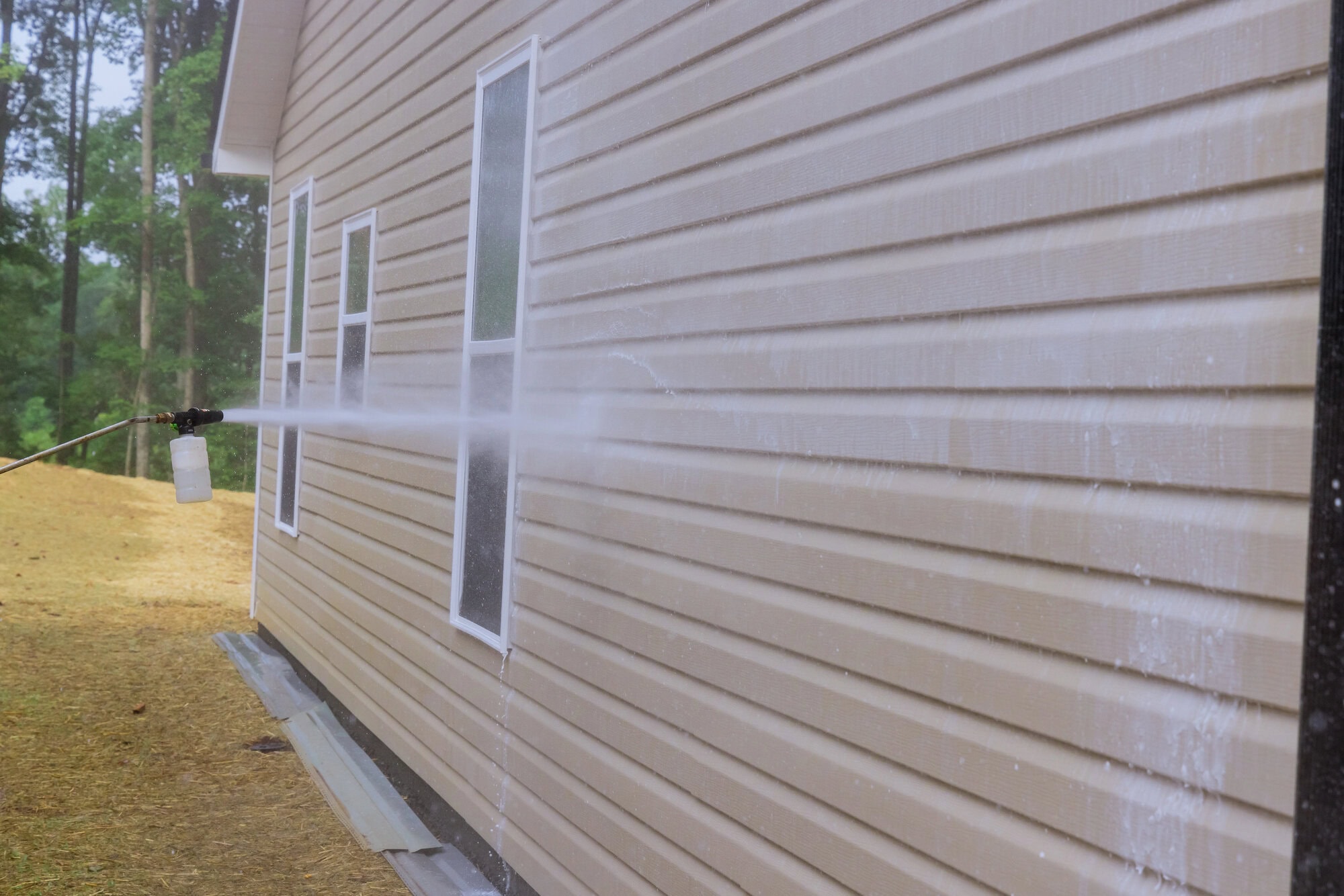
Yes—you should pressure wash (or thoroughly clean) your home’s exterior before painting. Washing removes dirt, chalk, mildew, and loose paint so the new coat can actually bond, and skipping it is one of the top reasons exterior paint peels early. Just as important: let the surface dry fully—usually 24 to 48 hours—before you pick up a brush. In Colorado’s dusty, high-UV climate, a clean surface is the foundation of a paint job that lasts.
Here’s why washing matters, how to do it safely, and how long to wait before painting.
Why should you wash before painting?
Washing before painting matters because paint bonds to the surface, not to the dirt on it. Over time, exterior siding collects dust, pollen, chalk (from degrading old paint), mildew, and cobwebs—and paint applied over that grime can’t grip properly, so it peels and flakes prematurely. A clean surface is what lets the new coat adhere and last.
In the Denver area, exteriors pick up a lot of fine dust and chalk under intense sun, so this step is especially important. A good wash also lets you see the true condition of the siding—revealing peeling, cracks, or rot to address before painting.
Do you have to use a pressure washer?
No—you don’t strictly need a pressure washer, but you do need to clean the surface thoroughly. Pressure (or “power”) washing is fast and effective for removing chalk and grime, but hand-washing with a hose, brush, and cleaning solution works too, especially on delicate surfaces. The goal is a clean, sound surface, whatever method gets you there.
Can pressure washing damage your siding?
Yes—used carelessly, a pressure washer can gouge wood, crack siding, force water behind panels, or strip material. That’s why technique matters: the right pressure, nozzle, distance, and angle protect the surface while still cleaning it. Too much pressure causes damage; too little leaves grime behind.
How do you pressure wash a house before painting?
Done right, washing is straightforward. The general approach:
- Protect the area. Cover plants, close windows, and move or shield fixtures.
- Use the right setup. Choose an appropriate PSI, a wide-angle tip, and add a mildew-killing cleaner where needed.
- Work top to bottom. Spray at a slight downward angle, keeping the nozzle a safe distance from the siding.
- Don’t force water upward behind siding, trim, or under laps.
- Treat mildew and stains with the proper cleaner rather than just brute pressure.
- Rinse thoroughly so no residue is left to interfere with paint.
Washing is one part of full prep. For the complete picture, see our step-by-step guide on the best way to prep an exterior for painting.
How long should you wait to paint after washing?
Let the surface dry completely before painting—generally 24 to 48 hours, and longer for wood or in cool, humid, or shaded conditions. Painting over damp siding traps moisture under the film, which leads to peeling, blistering, and adhesion failure. Wood in particular needs to dry out fully, since it absorbs and holds water.
In Colorado’s dry air and sun, surfaces often dry on the faster end, but shaded north-facing walls and wood siding still need extra time. When in doubt, wait longer—dry siding is critical to a lasting finish.
| Surface / condition | Typical dry time before painting |
|---|---|
| Vinyl, metal, sunny walls | ~24 hours |
| Fiber cement, stucco | 24–48 hours |
| Wood siding | 48+ hours |
| Shaded, cool, or humid areas | Longer—wait until fully dry |
Is washing worth the extra step?
Absolutely—washing is one of the highest-value steps in an exterior paint job. It’s the difference between paint that bonds and lasts for years and paint that peels within a season or two. Cutting this step to save time almost always costs more later in early repainting.
Because proper washing and drying take equipment, technique, and patience, many homeowners leave it to professionals. Expert exterior painting in Lakewood, CO includes the right cleaning and prep so your new paint adheres and endures.
Start your paint job on a clean surface
Washing before painting isn’t optional—it’s the foundation of a durable finish, especially in Colorado’s dusty, high-UV climate. Want it done right from the first step? Paint Craft Co. can handle the prep and the paint. Request a free, no-pressure estimate today—Paint Craft Co. proudly serves Denver and Lakewood, CO and the surrounding Front Range communities (Englewood, Golden, Greenwood Village, Highlands Ranch, and Littleton, plus the wider Denver metro). Call (720) 999-9704 or visit our contact page.
Frequently Asked Questions
Do you have to pressure wash before painting?
You should always clean the exterior before painting, and pressure washing is the fastest way to remove dirt, chalk, and mildew so the paint can bond. You don’t strictly need a pressure washer—thorough hand-washing works too—but skipping cleaning altogether is a top cause of early peeling.
Can pressure washing damage my siding?
Yes, if done incorrectly. Too much pressure or a wrong angle can gouge wood, crack siding, strip material, or force water behind panels. Using the right pressure, nozzle, distance, and a top-to-bottom technique cleans the surface effectively without causing damage.
How long should I wait to paint after pressure washing?
Wait until the surface is completely dry—generally 24 to 48 hours, and longer for wood or in cool, humid, or shaded conditions. Painting over damp siding traps moisture under the film and causes peeling and blistering, so err on the side of waiting longer.
What happens if you paint without washing first?
If you paint over dirt, chalk, or mildew, the new paint bonds to the grime instead of the surface, so it peels and flakes prematurely. Washing removes those contaminants and lets the paint adhere properly, which is essential for a long-lasting finish.
Should I use a cleaner or just water to wash my house?
For general dust, water and pressure may be enough, but mildew, mold, and heavy stains need an appropriate cleaning solution to kill and remove them. Using the right cleaner ensures the surface is truly clean, not just rinsed, so the paint can bond well.

Cameron Loughlin is the founder of Paint Craft Co., a new residential and commercial painting company serving Denver and Colorado Springs. With over a decade of hands-on experience, he combines technical craftsmanship with strengths in sales, marketing, and team building. Cameron has learned what homeowners and businesses value most: clear communication, reliability, and superior workmanship. He has built his company to deliver exactly that. His vision marries the professionalism and systems of a larger firm with the personalized attention of a local business. He’s assembling a team of skilled painters who take pride in their craft and a customer-first approach that keeps projects on time, on budget, and stress-free. From complete home transformations to commercial refreshes and specialized work on cabinets, decks, and fences, Cameron focuses on exceptional results and lasting relationships. By streamlining estimates, scheduling, and follow-up, he makes the process transparent. Cameron is committed to trust, consistency, and genuine local community care.